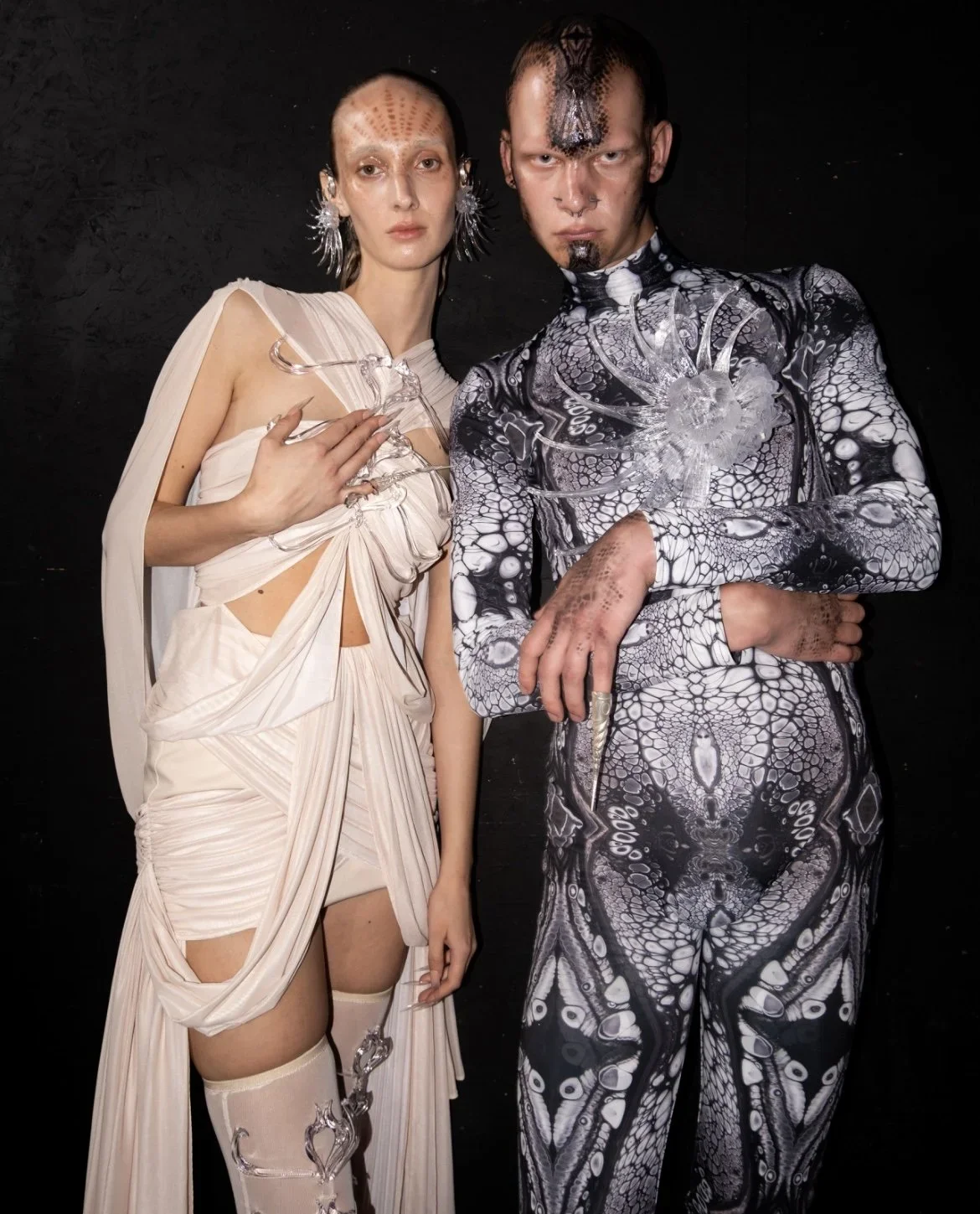
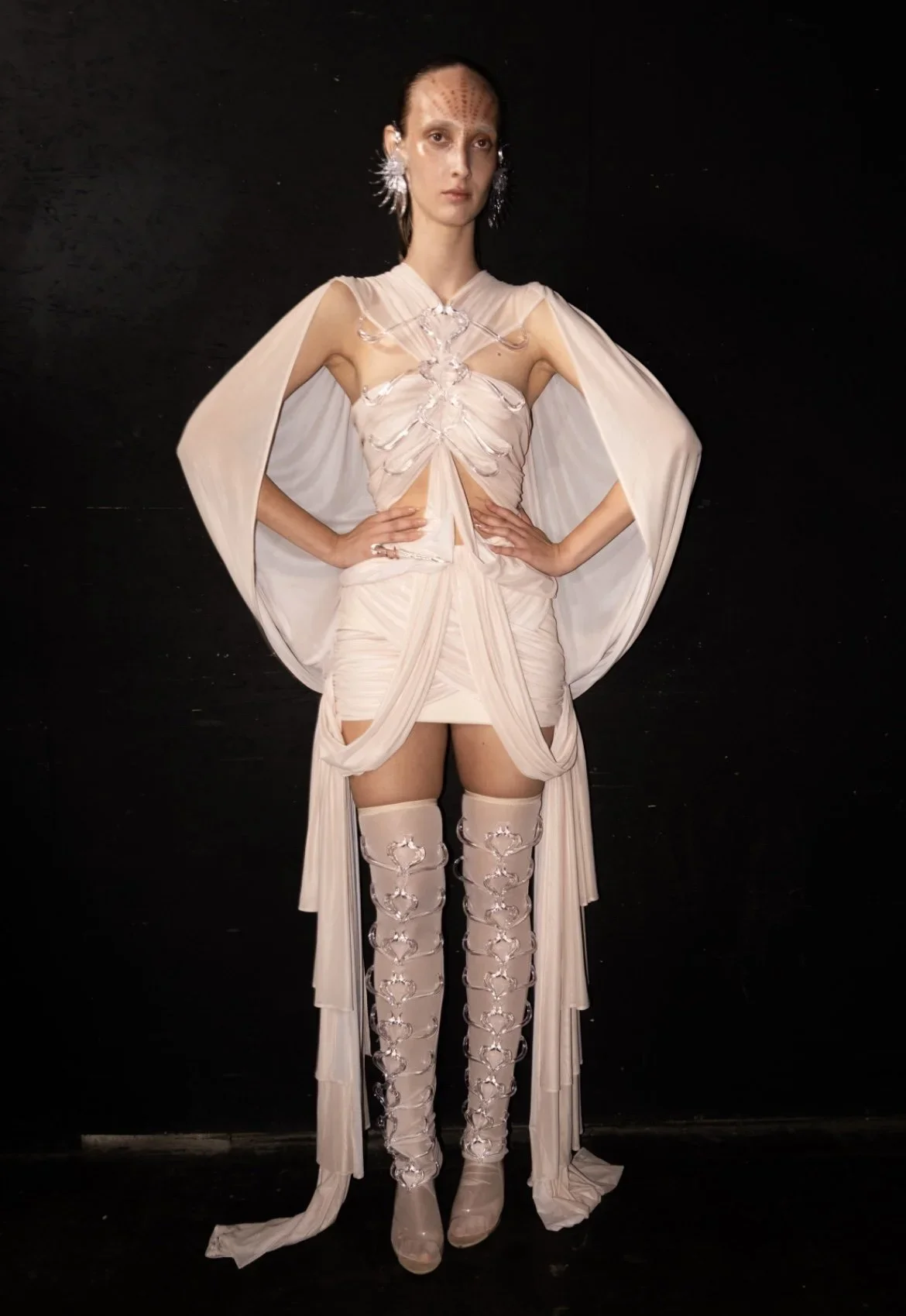
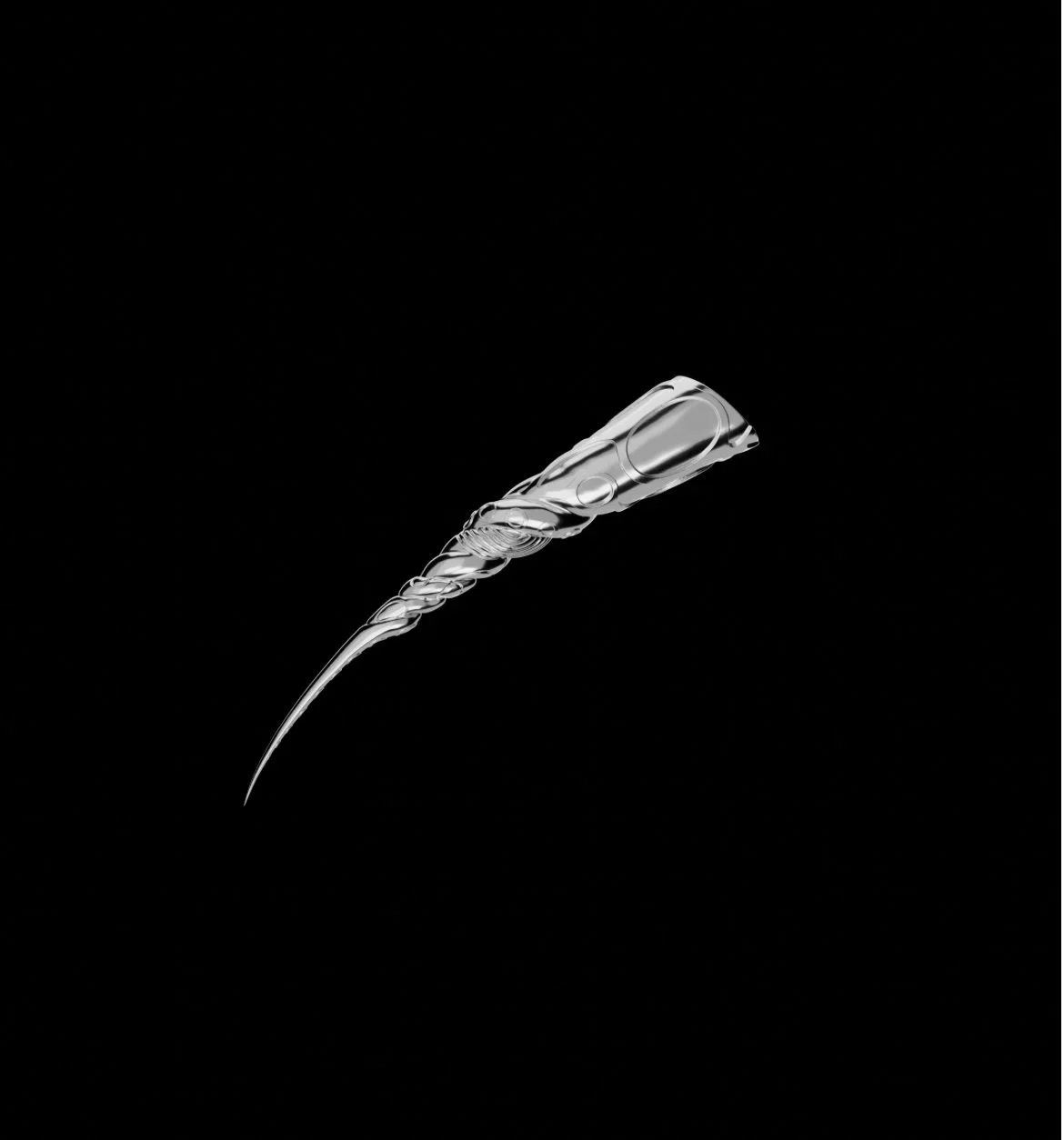
But this unveiling was about more than technical mastery. It was about redefining what precious means. “This is not a variation on tradition. It’s the end of it,” the team declared. And the presentation lived up to that statement.
The runway itself carried a sculptural, immersive quality, with each model showcasing a piece that told its own story. Instead of mere decoration, each object stood as an architectural statement, a new kind of adornment stripped to substance and purity.
At the center of this vision was Hengdi Wang, a designer celebrated for merging Taoist philosophy, biomechanics, and sacred geometry into gender-fluid, sculptural forms. Known for his architectural silhouettes and conceptual precision, Wang approached Rhodium as more than a material — he treated it as a medium of strength and intention. His collaboration with Stim Precious Metals translated the metal’s resistance into visual clarity, bringing to life jewellery that doesn’t just embellish but challenges, questions, and redefines.
“This is where material becomes message.”
That message was clear throughout the night: permanence over excess, substance over symbol. Rhodium may only see about 30 tons produced globally per year, but in this moment, it set the standard for the future of high jewelry.